BUILT FACTS
Physical configuration
- Wingspan13.1 ft
- Length7.5 ft
- Height2.8 ft
- StructureBalsa / plywood
- Propulsion conceptTwin electric
- Motor specification2 × 1800 W
- Take-off / landing conceptRunway / grass
The aircraft that started RGASS.
A large, scratch-built twin-electric fixed-wing UAS prototype developed around modular payload support, autonomous-flight integration and the ability to evolve through practical engineering and testing.
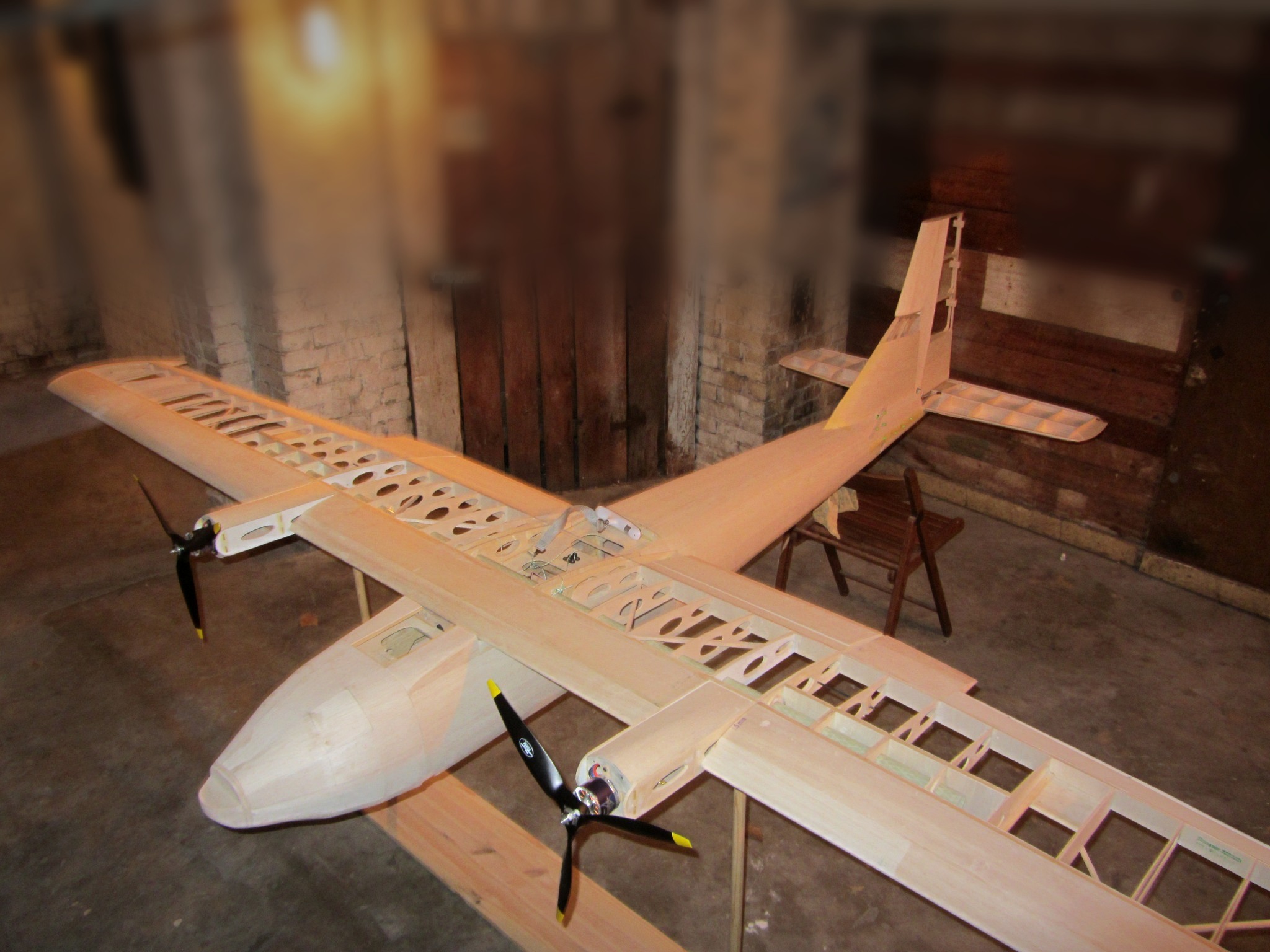
LF-2944 was conceived as a multi-role UAS rather than an aircraft tied to one sensor or one mission. The airframe uses conventional balsa and plywood construction, allowing components to be inspected, modified and repaired while the system develops.
These figures come from the original LF-2944 development datasheet and are presented here as historical design targets, not as demonstrated operational performance.
Original build photographs with the workshop background softened to keep attention on the aircraft itself.
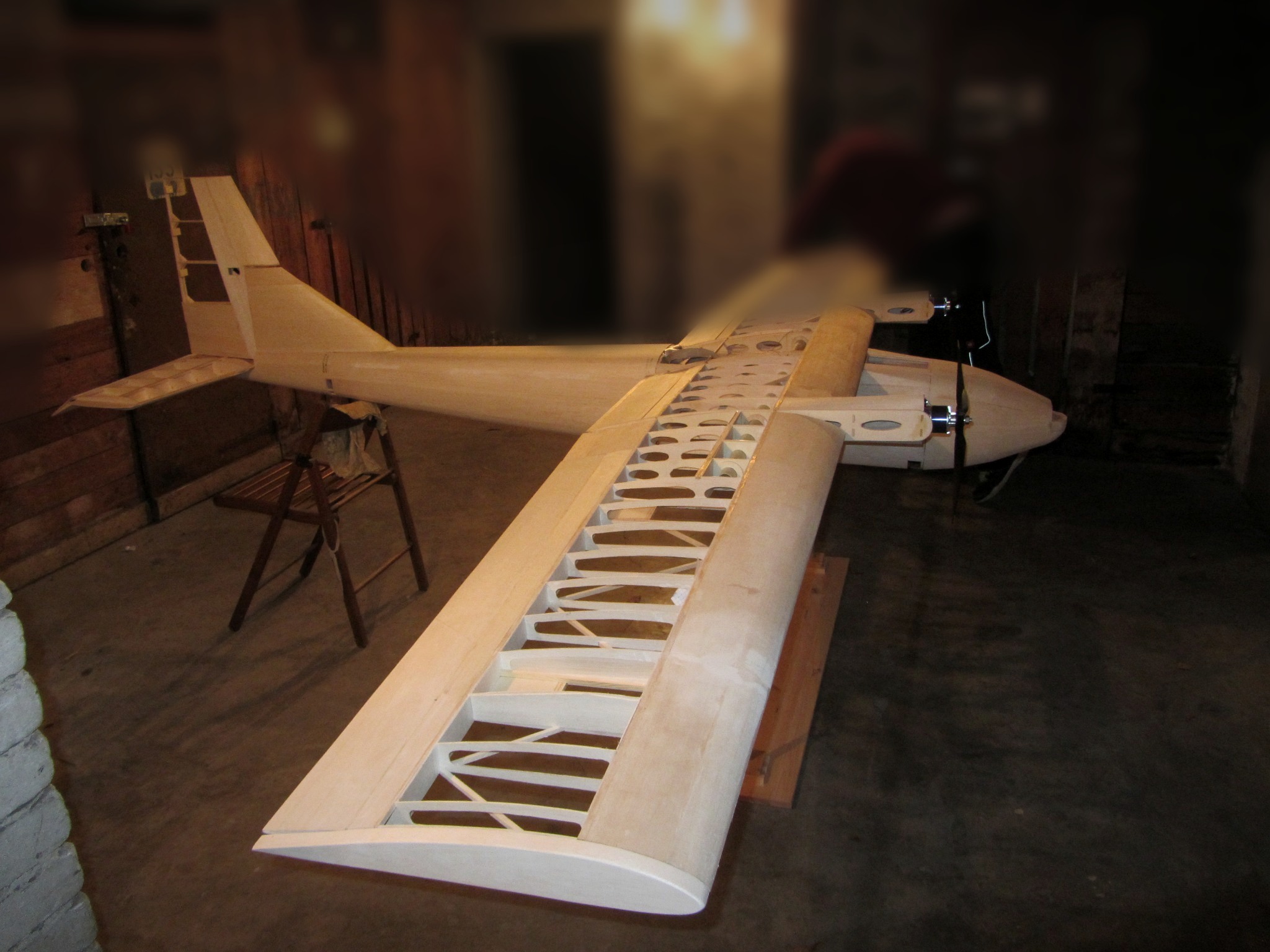
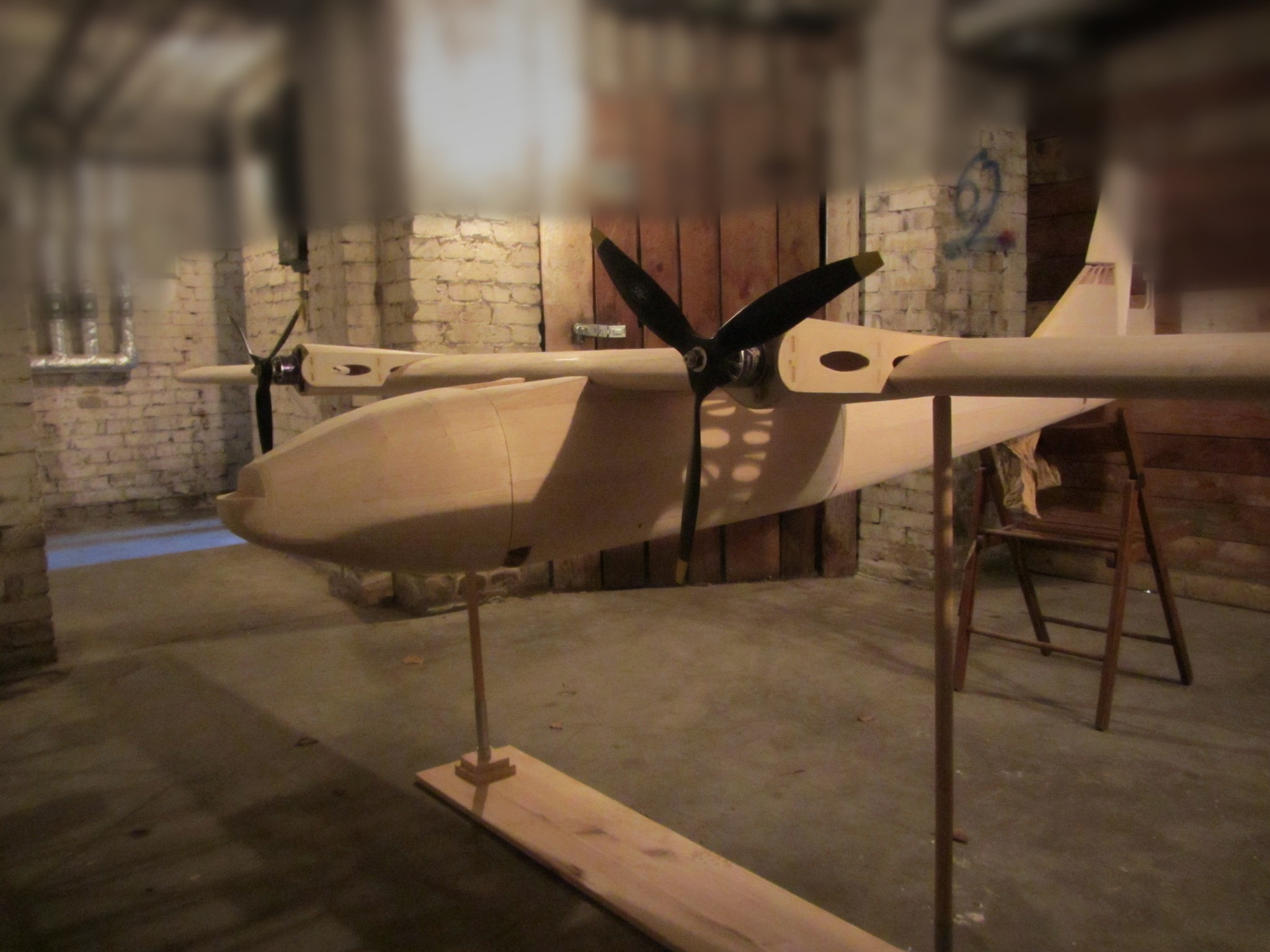
The project brought together large-model aircraft construction, electric propulsion, payload thinking, radio control, ground systems and the move toward autopilot-assisted operation.
That same practical approach continues through RGASS work on fixed-wing UAS, flight controllers, FPV systems, antennas, power systems, flight-log analysis and SightNav development.